
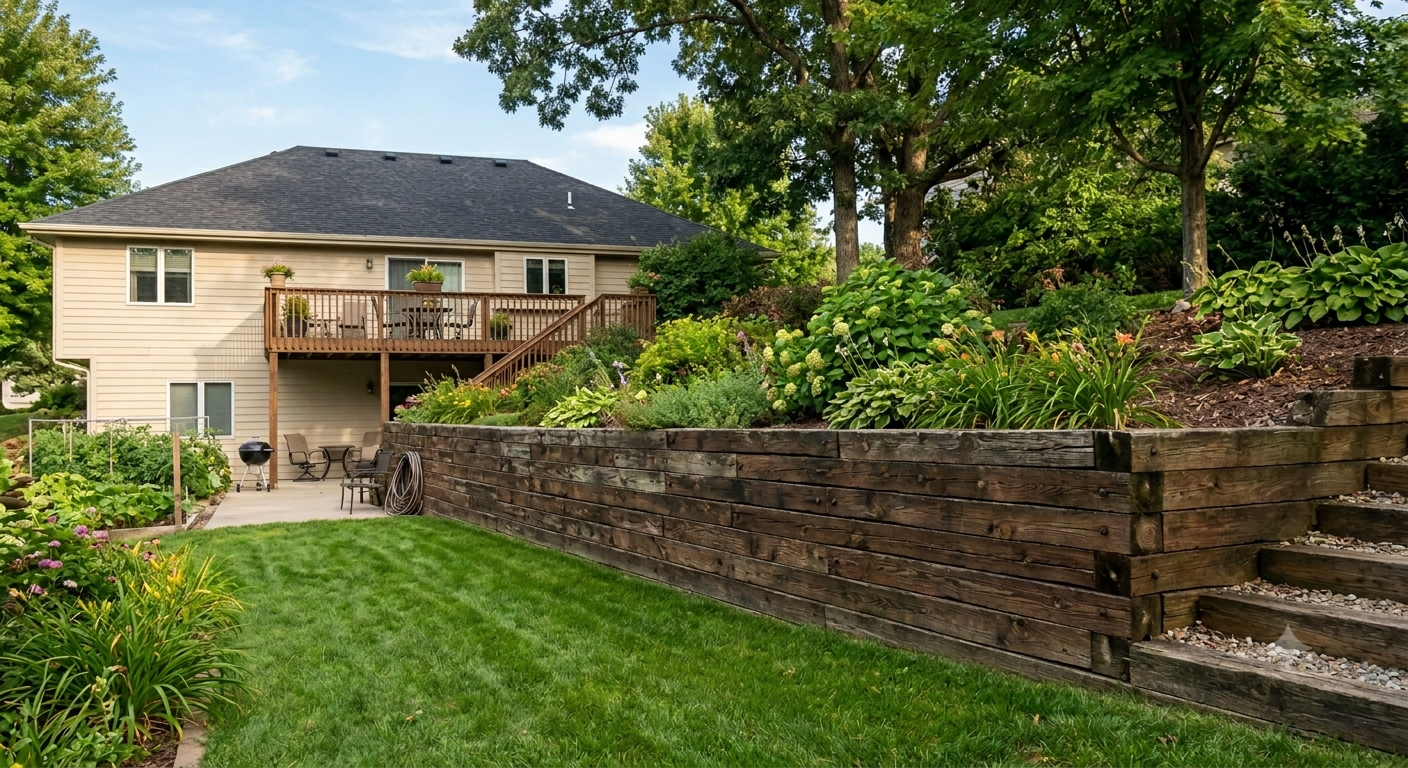
Walls That Hold Back Soil and Water
Retaining Walls in Cedar Rapids for properties with elevation changes and erosion concerns
Wooden retaining walls address one specific engineering problem: they hold soil in place where your property changes elevation. B-Eazie Repair & Handywork installs, repairs, and replaces wooden retaining walls across Cedar Rapids, Dubuque, Iowa City, and the surrounding areas for residential properties where grading creates the need for structural support. When timbers begin to shift outward or individual boards crack and rot, the wall stops performing its function and soil movement accelerates.
The service involves anchoring pressure-treated lumber into properly excavated positions, installing drainage systems behind the wall to redirect groundwater away from the wood, and securing each timber course to prevent lateral movement under soil pressure. Iowa's freeze-thaw cycles place constant stress on retaining walls as moisture trapped behind the structure expands when temperatures drop, pushing outward against the timbers. Without proper drainage channels and structural support, walls deteriorate within years rather than decades.
Request an on-site assessment to evaluate wall stability and drainage performance.
What Proper Retaining Wall Construction Requires
Wooden retaining wall installation begins with excavation to establish a level base, placement of compacted gravel for drainage, and installation of the first timber course below grade to anchor the structure. Each subsequent timber layer is spiked or bolted to the course beneath it, and a drainage system using perforated pipe and gravel backfill directs water away from the wood to prevent saturation and rot.
After the wall is complete, you notice that soil stays in place during heavy rain, water no longer pools at the base of the slope, and the yard becomes usable where elevation previously made it inaccessible. Properly constructed walls can handle Iowa weather conditions for fifteen to twenty years before timbers require replacement, assuming drainage systems continue to function correctly.
Repair work addresses specific failure points: replacing rotted timbers in sections where moisture concentration is highest, reinforcing walls that have begun to lean forward due to inadequate anchoring, and adding drainage where original installation omitted it. The condition of the existing structure determines whether selective repairs extend the wall's lifespan or whether full replacement becomes the more cost-effective approach.
Questions Property Owners Ask About Retaining Walls
Wooden retaining walls serve both functional and aesthetic purposes in Cedar Rapids residential landscapes, and understanding how they perform helps property owners make informed decisions about installation and maintenance.
What causes wooden retaining walls to fail?
Inadequate drainage behind the wall allows water to saturate the soil and pressure-treated lumber, creating constant outward force that loosens anchoring connections and accelerates rot in the timbers where moisture cannot evaporate.
How does the drainage system work behind a retaining wall?
Perforated drainage pipe installed at the base of the wall collects groundwater that filters through the gravel backfill, directing it laterally to daylight or a discharge point rather than allowing it to saturate the soil directly behind the timbers.
When should I repair versus replace a retaining wall?
If fewer than thirty percent of the timbers show rot or structural damage and the wall has not shifted more than two inches from vertical, targeted repairs typically extend the wall's functional life by five to ten years.
What height limitations apply to wooden retaining walls?
Walls exceeding four feet in exposed height generate soil pressure that often requires engineering consultation to determine appropriate anchoring methods, timber sizing, and drainage capacity for long-term stability.
How do Iowa winters affect retaining wall performance?
Repeated freeze-thaw cycles expand moisture in the soil behind the wall, creating outward pressure spikes throughout late winter and early spring that stress connections between timber courses and test the wall's structural anchoring.
B-Eazie Repair & Handywork evaluates both structural condition and drainage performance during retaining wall assessments in Cedar Rapids and neighboring communities. Schedule a property consultation to determine whether your wall requires targeted repairs or full replacement based on current timber condition and soil movement patterns.